
 Hyundai Equus: Relay Box (Passenger Compartment) Components and Components Location
Second generation VI (2009–2026) / Hyundai Equus VI 2009-2026 Service Manual / Body Electrical System / Fuses And Relays / Relay Box (Passenger Compartment) Components and Components Location
Hyundai Equus: Relay Box (Passenger Compartment) Components and Components Location
Second generation VI (2009–2026) / Hyundai Equus VI 2009-2026 Service Manual / Body Electrical System / Fuses And Relays / Relay Box (Passenger Compartment) Components and Components Location
Second generation VI (2009–2026) / Hyundai Equus VI 2009-2026 Service Manual / Body Electrical System / Fuses And Relays / Relay Box (Passenger Compartment) Components and Components Location
| Component Location |
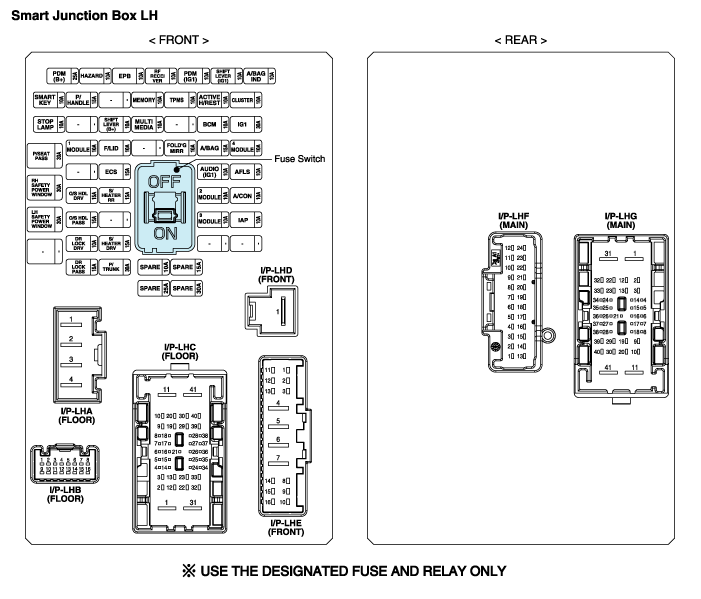
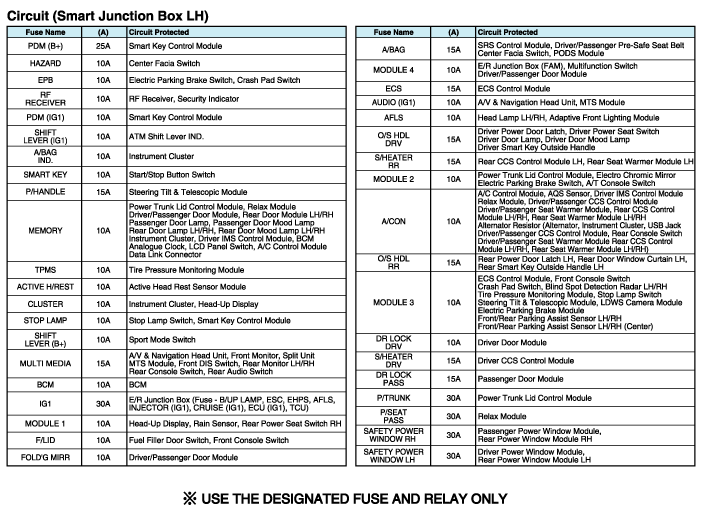
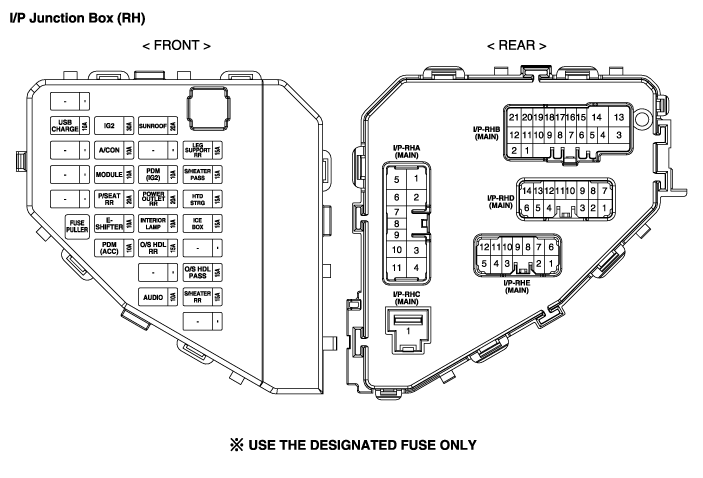
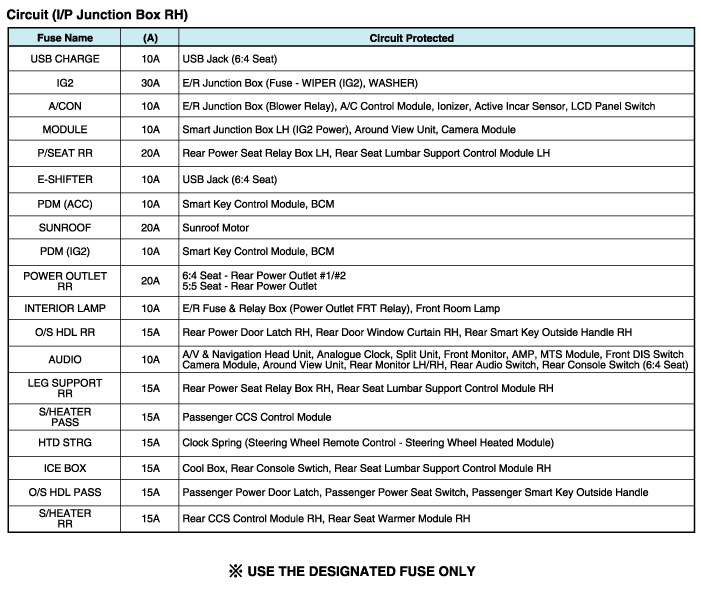
 Relay Box (Engine Compartment) Repair procedures
Inspection
1.
Disconnect the negative (-) battery terminal.
2.
Pull out the relay from the engine compartment relay box.
Power Relay (Type A)
-
Do not use pliers.
...
 Relay Box (Passenger Compartment) Description and Operation
Description
1.
Smart Junction Box(SJB)
(1)
General function : Interior Junction Box + some functions of BCM
(2)
It controls loads with CAN communication and IPS.
(3)
IPS stands for Intel ...
See also:
Trunk room lamp
The trunk room lamp comes on when the trunk is opened.
CAUTION
The trunk room lamp comes on as long as the trunk lid opens. To prevent unnecessary
charging system drain, close the trunk lid se ...
External AMP Components and Components Location
Components
Connector Pin Information
No.Connector AConnector BConnector C 1B (+)Right surround (+)right rear door (+)2B (+)Left surround (+)left rear door (+)3B (+)Rear right midrange/tweeter (+)R ...
Inhibitor Switch Specifications
Specifications
x Type: Combination of output signals from 4 terminals
Power supply (V)12Output typeCombination of output signals
Signal Code Table
PIN No.PP-RRR-NNN-DDS112V12VO ...
Categories
Hyundai Equus Manuals

© 2011-2026 Copyright www.heqmanual.com