
 Hyundai Equus: Front Lower Arm Repair procedures
Second generation VI (2009–2026) / Hyundai Equus VI 2009-2026 Service Manual / Suspension System / Front Suspension System / Front Lower Arm Repair procedures
Hyundai Equus: Front Lower Arm Repair procedures
Second generation VI (2009–2026) / Hyundai Equus VI 2009-2026 Service Manual / Suspension System / Front Suspension System / Front Lower Arm Repair procedures
Second generation VI (2009–2026) / Hyundai Equus VI 2009-2026 Service Manual / Suspension System / Front Suspension System / Front Lower Arm Repair procedures
| Removal |
Remove the lateral arm.
| 1. |
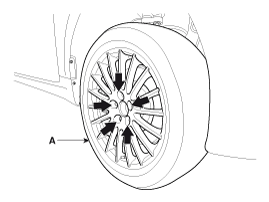
Remove the front wheel and tire (A) from front hub .
|

| 2. |
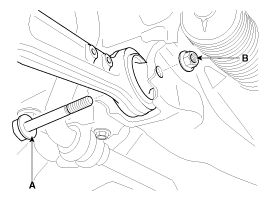
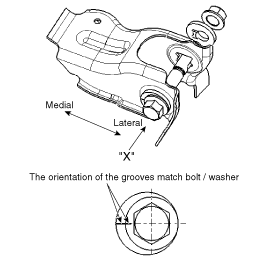
Loosen the flange bolt (A) & lock nut (B).
|

| 3. |
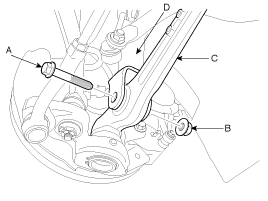
Unscrew the flange bolt (A) and lock nut (B) to disconnect the lateral arm (C) from the strut assembly (D).
|

| 4. |
Remove the split pin (A) and castle nut (B).
|
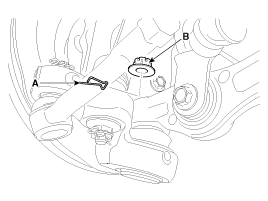
| 5. |
Apply grease to the special tool (09568-2J100), as shown in
the following figure. Then, use the special tool to disconnect the
lateral arm (A) from the knuckle.
|
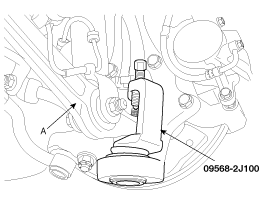
| 6. |
Install in the reverse order of removal. |
| 7. |
Check the front alignment.
(Refer to Tires/Wheels - "Alignment") |
Remove the tension arm.
| 1. |
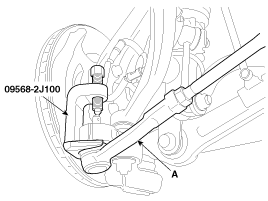
Disconnect the pin and castle nut from the tie-rod end (A) and tension arm (B).
|
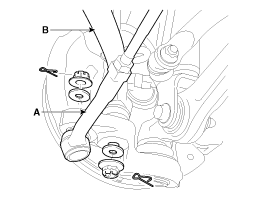
| 2. |
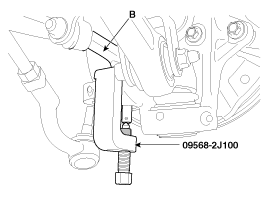
Apply grease to the special tool (09568-2J100), as shown in
the following figure. Then, use the special tool to remove the tie-rod
end (A) and tension arm (B) from the knuckle.
|
| 3. |
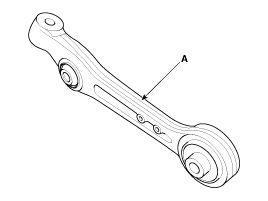
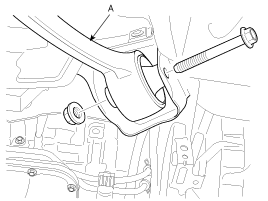
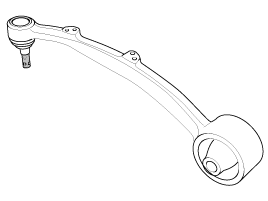
Disconnect the flange bolt and lock nut to remove the tension arm (A) from the frame.
|
| 4. |
Install in the reverse order of removal. |
| 5. |
Check the alignment.
(Refer to Tires/Wheels - "Alignment")
|
| Inspection |
| 1. |
Check the lower arm bushings for damage or signs of aging. If necessary, replace the lower arm assembly. |
| 2. |
Chech the lower arm for deformation. |
| 3. |
Check the all bolts. |
 Front Upper Arm Repair procedures
Removal
1.
Remove the front wheel and tire (A) from front hub .
Tightening torque:
88.3 ~ 107.9 N.m (9.0 ~ 11.0 kgf.m, 65.1 ~ 79.6 lb-ft)
•
Be careful not to dama ...
 Front Stabilizer Bar Repair procedures
Replacement
1.
Removal the front wheel & tire.
Tightening torque :
90.0 ~ 110.0 N.m(9.0 ~ 11.0 kgf.m, 65.0 ~ 80.0 lb-ft)
2.
Disconnect the stabilizer link (A) from the front strut a ...
See also:
LCD Display Control
The LCD display modes can be changed by using the control buttons on the steering
wheel.
(1) button : Changing LCD modes
(right to left), or returning to previous position
(2) button : Chan ...
To keep locks from freezing
To keep the locks from freezing, squirt an approved de-icer fluid or glycerine
into the key opening. If a lock is covered with ice, squirt it with an approved
de-icing fluid to remove the ice. If ...
Starter Specifications
Specification
ItemSpecificationRated voltage12 V, 1.7 kWThe number of pinion teeth13Performance[No-load, 11.5 V]AmpereMax. 85 ASpeedMin. 2,550 rpm
...
Categories
Hyundai Equus Manuals

© 2011-2026 Copyright www.heqmanual.com