
 Hyundai Equus: TPMS Sensor Repair procedures
Second generation VI (2009–2026) / Hyundai Equus VI 2009-2026 Service Manual / Suspension System / Tire Pressure Monitoring System / TPMS Sensor Repair procedures
Hyundai Equus: TPMS Sensor Repair procedures
Second generation VI (2009–2026) / Hyundai Equus VI 2009-2026 Service Manual / Suspension System / Tire Pressure Monitoring System / TPMS Sensor Repair procedures
Second generation VI (2009–2026) / Hyundai Equus VI 2009-2026 Service Manual / Suspension System / Tire Pressure Monitoring System / TPMS Sensor Repair procedures
| Removal |
Tire Removal
| 1. |
Deflate tire & remove balance weights.
|

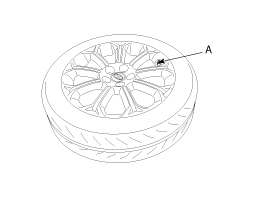
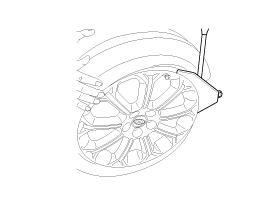
Sensor Removal
Handle the sensor with care. |
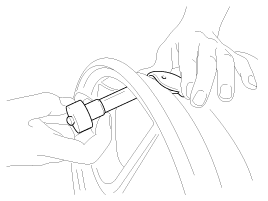
| 1. |
Remove the valve nut.
|
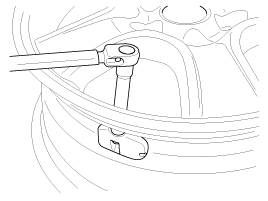
| 2. |
Discard the valve assembly. |
| Installation |
Sensor Fit
|
| 1. |
Assemble valve to sensor and turn valve 3 times with the square part of the screw in the slot.
|
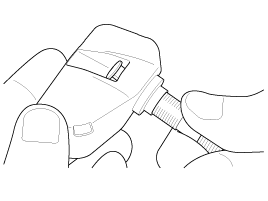
| 2. |
Mount assembly to wheel.
|
| 3. |
Tighten washer and nut by hand until the valve thread meets the nut built-in calibrated stop.
|
| 4. |
Using a torque wrench, tighten the nut to 8.0N,m (±1.0 N.m)
|
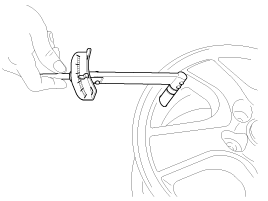
| 1. |
Sensor mounting
|
Tire Fit
Only use wheels designed to accommodate the TPMS sensor. |
| 1. |
Lubricate the tire bead not the rim. Excessive lubrication should not be applied. |
| 2. |
Start tire mounting approx. 5.9 in(15 cm) from valve. |
| 3. |
Move the mounting tool away from the valve.
|
| 4. |
Finish with mounting tool near to valve. |
| 5. |
Carry out inflation / pressure correction and then fit valve cap.
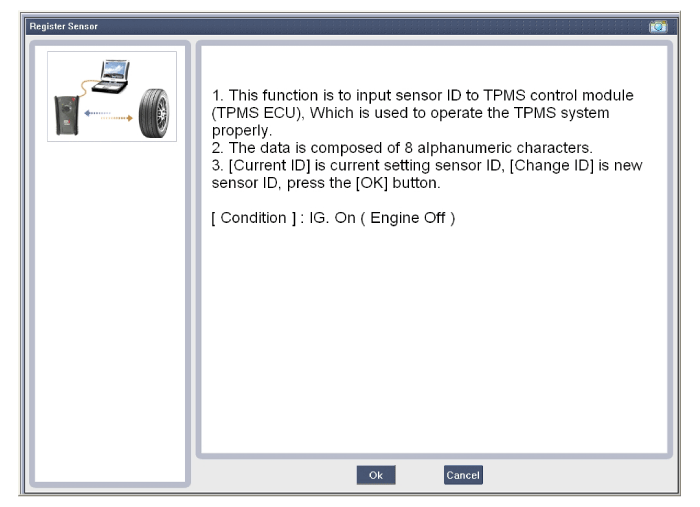
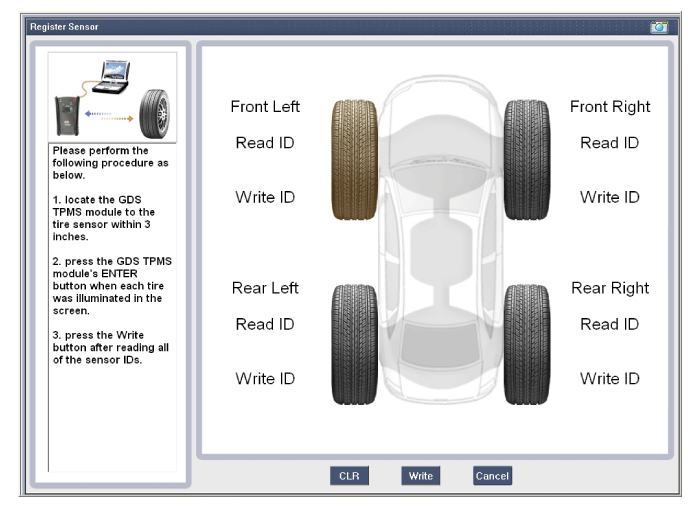
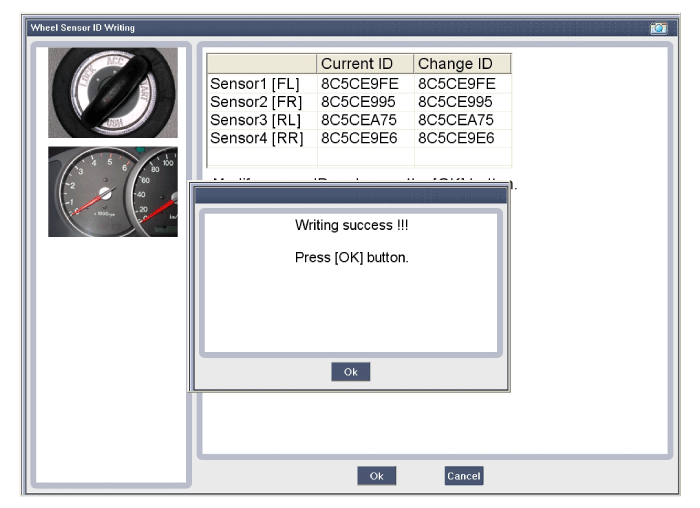
Sensor ID Writing (Wireless)
Sensor ID Writing
|
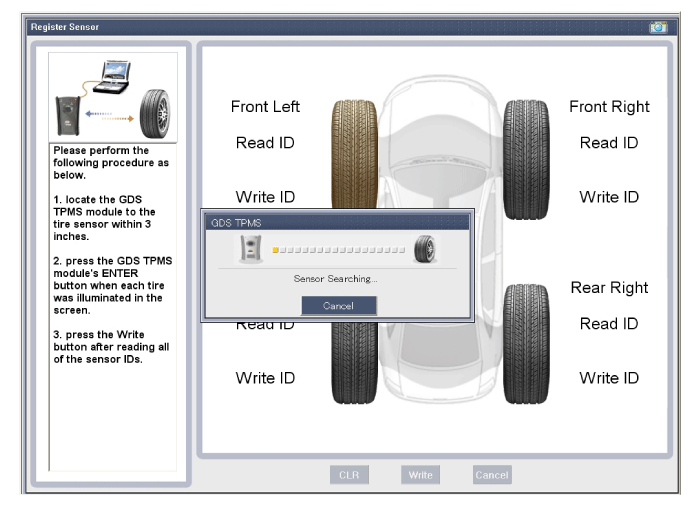
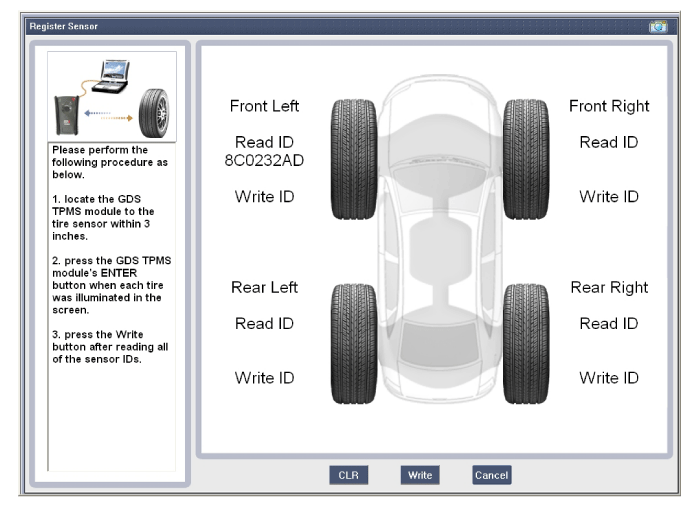
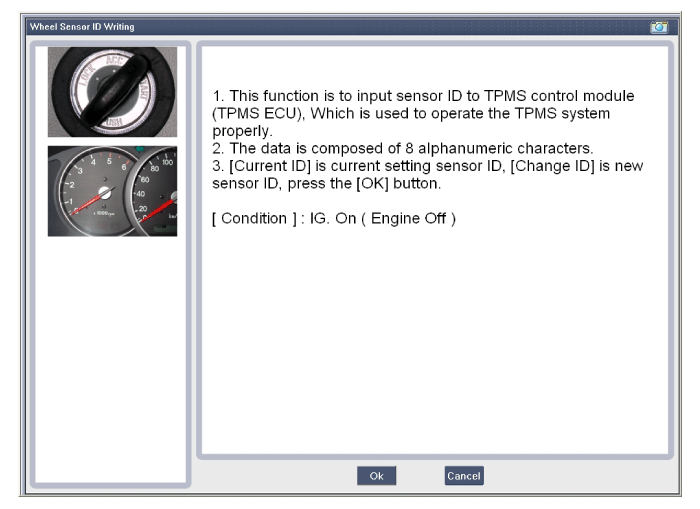
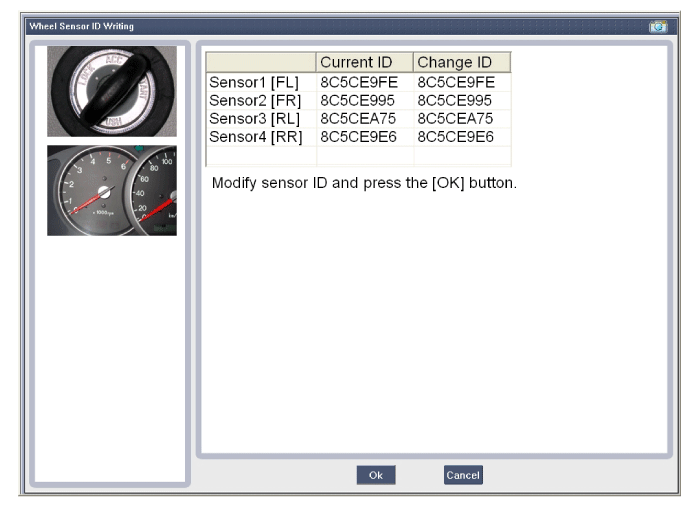
 TPMS Sensor Description and Operation
Description
1.
General description
(1)
WU is a sensor placed in the tire that reports pressure and temperature.
(2)
The WU is mounted inside the wheels, fixed to the valve. The angle between ...
 TPMS Receiver Description and Operation
Description
1.
Mode
(1)
Virgin State
A.
The receiver as a sole part is shipped in this state. Replacement parts should therefore arrive in this state.
B.
In this state, there is no Auto-Lo ...
See also:
Passenger Airbag (PAB) Module Repair procedures
Removal
1.
Disconnect the battery negative cable and wait for at least three minutes before beginning work.
2.
Remove the glove box housing.
(Refer to Body - "Glove Box Housing")
3.
Disc ...
ECU Schematic Diagrams
Circuit diagram
1.
ECU Connector
2.
ECU Terminal function
TerminalFunction1Ground2Ground3IGN4Battery5Battery6-7-8-9-10-11-12Reverse Valve 1x(M1 Low Side)13Ambiance Valve14Reverse Valve 2x( ...
Smart key precautions
The smart key will not work if any of the following occur:
- The smart key is close to a radio transmitter such as a radio station or an
airport which can interfere with normal operation of th ...
Categories
Hyundai Equus Manuals

© 2011-2026 Copyright www.heqmanual.com