
 Hyundai Equus: Rear Shock Absorber Repair procedures
Second generation VI (2009–2026) / Hyundai Equus VI 2009-2026 Service Manual / Suspension System / Rear Suspension System / Rear Shock Absorber Repair procedures
Hyundai Equus: Rear Shock Absorber Repair procedures
Second generation VI (2009–2026) / Hyundai Equus VI 2009-2026 Service Manual / Suspension System / Rear Suspension System / Rear Shock Absorber Repair procedures
Second generation VI (2009–2026) / Hyundai Equus VI 2009-2026 Service Manual / Suspension System / Rear Suspension System / Rear Shock Absorber Repair procedures
| Removal |
| 1. |
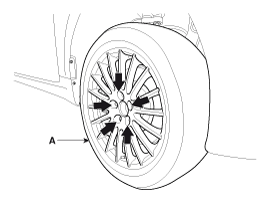
Remove the rear wheel and tire (A) from rear hub .
|

| 2. |
Support the lower portion of the rear axle with a jack securely. |
| 3. |
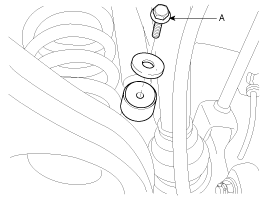
Disconnect the rear carrier with the rear shock absorber by loosening the bolts (A).
|
| 4. |
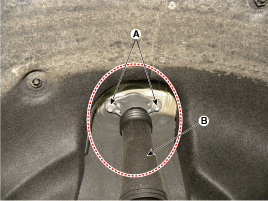
Unscrew the bracket retaining bolt (A) to disconnect the rear shock absorber (B) from the wheel housing panel.
|
| 5. |
Install in the reverse order of removal.
|
| Inspection |
| 1. |
Repeatedly pump the piston rod (A) to check it for abnormal resistance or noises. |
| 2. |
If the piston rod does not move smoothly or creates abnormal noise when moving, replace the shock absorber assembly. |
| 3. |
To dispose of a shock absorber, fully extend the piston rod and drill a hole in the rear section (B) to release the gas.
|
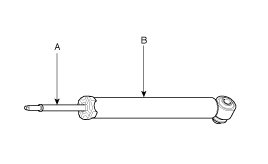
 Rear Shock Absorber Components and Components Location
Components
1. Insulator cap2. Lock nuts3. Bracket assembly4. Dust cover5. Bumper stopper6. Shock absorber
...
 Rear Upper Arm Repair procedures
Removal
1.
Remove the rear wheel and tire (A) from rear hub .
Tightening torque:
88.3 ~ 107.9 N.m (9.0 ~ 11.0 kgf.m, 65.1 ~ 79.6 lb-ft)
•
Be careful not to damage ...
See also:
Changing tires
1.Park on a level surface and apply the parking brake firmly.
2.Shift the shift lever into P (Park).
3.Activate the hazard warning flasher.
4.Remove the wheel lug nut wrench, jack, jack han ...
Owner maintenance
The following lists are vehicle checks and inspections that should be performed
by the owner or an authorized EQUUS dealer at the frequencies indicated to help
ensure safe, dependable operation of ...
Automatic-dimming function
Your mirror will automatically dim upon detecting glare from the vehicles traveling
behind you. The autodimming function can be controlled by the Dimming ON/OFF Button:
1. Pressing the button turn ...
Categories
Hyundai Equus Manuals

© 2011-2026 Copyright www.heqmanual.com