
 Hyundai Equus: Driving in the rain
Second generation VI (2009–2026) / Hyundai Equus 2009-2026 Owners Manual / Driving your vehicle / Special driving conditions / Driving in the rain
Hyundai Equus: Driving in the rain
Second generation VI (2009–2026) / Hyundai Equus 2009-2026 Owners Manual / Driving your vehicle / Special driving conditions / Driving in the rain
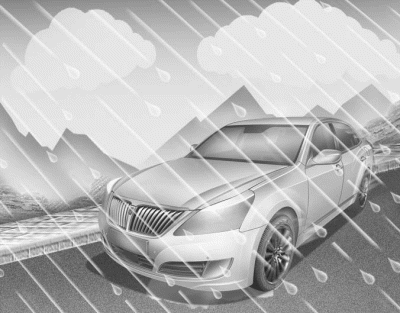
Rain and wet roads can make driving dangerous, especially if you’re not prepared for the slick pavement.
Here are a few things to consider when driving in the rain:
- A heavy rainfall will make it harder to see and will increase the distance needed to stop your vehicle, so slow down.
- Keep your windshield wiping equipment in good shape. Replace your windshield wiper blades when they show signs of streaking or missing areas on the windshield.
- If your tires are not in good condition, making a quick stop on wet pavement can cause a skid and possibly lead to an accident. Be sure your tires are in good shape.
- Turn on your headlights to make it easier for others to see you.
- Driving too fast through large puddles can affect your brakes. If you must go through puddles, try to drive through them slowly.
- If you believe you may have gotten your brakes wet, apply them lightly while driving until normal braking operation returns.
 Driving at night
Because night driving presents more hazards than driving in the daylight, here
are some important tips to remember:
Slow down and keep more distance between you and other vehicles, as it may ...
 Driving in flooded areas
Avoid driving through flooded areas unless you are sure the water is no higher
than the bottom of the wheel hub. Drive through any water slowly.
Allow adequate stopping distance because brake perfo ...
See also:
Jack and tools
The jack, jack handle, and wheel lug nut wrench are stored in the luggage compartment.
Pull up the luggage box cover to reach this equipment.
(1) Jack handle
(2) Jack
(3) Wheel lug nut wrench
...
Schematic Diagrams
System Block Diagram
Power Seat Memory Unit (For Driver)
Relax Power Seat Unit (For Passenger & Rear)
Circuit Diagram (1)
Power Seat Module - PSM (For Driver)
Circuit Diagram (2)
Rel ...
Photo Sensor Repair procedures
Inspection
1.
Turn the ignition switch ON.
2.
Connect the GDS.
3.
Emit intensive light toward the photo sensor using a lamp, and check the output voltage change.
4.
The voltage will ri ...
Categories
Hyundai Equus Manuals
