
 Hyundai Equus: Rear Lower Arm Repair procedures
Second generation VI (2009–2026) / Hyundai Equus VI 2009-2026 Service Manual / Suspension System / Rear Suspension System / Rear Lower Arm Repair procedures
Hyundai Equus: Rear Lower Arm Repair procedures
Second generation VI (2009–2026) / Hyundai Equus VI 2009-2026 Service Manual / Suspension System / Rear Suspension System / Rear Lower Arm Repair procedures
Second generation VI (2009–2026) / Hyundai Equus VI 2009-2026 Service Manual / Suspension System / Rear Suspension System / Rear Lower Arm Repair procedures
| Removal |
| 1. |
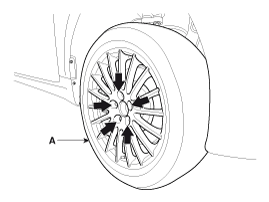
Remove the rear wheel and tire (A) from rear hub .
|

| 2. |
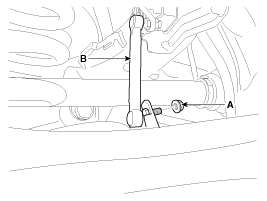
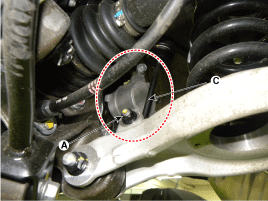
Disconnect the rear stabilizer link (C) & height sensor (B) from the rear lower arm by loosening the nut (A).
|
| 3. |
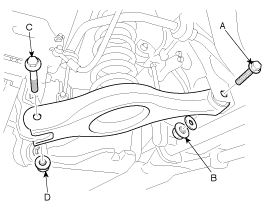
Loosen the bolt (A), nuts (B), flange bolt (C), lock nuts (D).
|
| 4. |
Install in the reverse order of removal. |
| 5. |
Check the alignment.
(Refer to Tires/Wheels - "Alignment") |
| Inspection |
| 1. |
Check the bushing for wear and deterioration. |
| 2. |
Check the rear lower arm deformation. |
| 3. |
Check the all bolts. |
| 4. |
Check the coil spring pad for deterioration and deformation. |
 Trailing Arm Repair procedures
Removal
1.
Remove the rear wheel and tire (A) from rear hub .
Tightening torque:
88.3 ~ 107.9 N.m (9.0 ~ 11.0 kgf.m, 65.1 ~ 79.6 lb-ft)
•
Be careful not to damage ...
 Rear Stabilizer Bar Repair procedures
Removal
1.
Remove the rear wheel and tire (A) from rear hub .
Tightening torque:
88.3 ~ 107.9 N.m (9.0 ~ 11.0 kgf.m, 65.1 ~ 79.6 lb-ft)
•
Be careful not to damage ...
See also:
Front Pillar Trim Components and Components Location
Component Location
1. Front pillar trim
...
Compass function
The Compass can be turned ON and OFF and will remember the last state when the
ignition is cycled. To turn the display feature ON/OFF:
1. Press and release the button
to turn the display feature ...
Engine Coolant Temperature Sensor (ECTS) Repair procedures
Inspection
1.
Turn the ignition switch OFF.
2.
Remove the ECTS (Refer to "Removal").
3.
After immersing the thermistor of the sensor into engine coolant, measure resistance between the ECT ...
Categories
Hyundai Equus Manuals

© 2011-2026 Copyright www.heqmanual.com