
 Hyundai Equus: Driving in the rain
Second generation VI (2009–2026) / Hyundai Equus 2009-2026 Owners Manual / Driving your vehicle / Special driving conditions / Driving in the rain
Hyundai Equus: Driving in the rain
Second generation VI (2009–2026) / Hyundai Equus 2009-2026 Owners Manual / Driving your vehicle / Special driving conditions / Driving in the rain
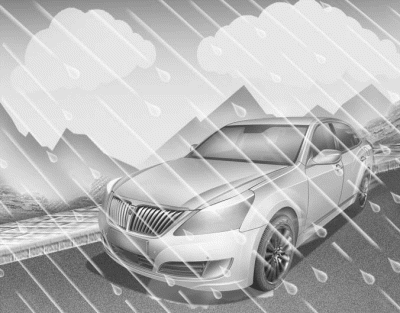
Rain and wet roads can make driving dangerous, especially if you’re not prepared for the slick pavement.
Here are a few things to consider when driving in the rain:
- A heavy rainfall will make it harder to see and will increase the distance needed to stop your vehicle, so slow down.
- Keep your windshield wiping equipment in good shape. Replace your windshield wiper blades when they show signs of streaking or missing areas on the windshield.
- If your tires are not in good condition, making a quick stop on wet pavement can cause a skid and possibly lead to an accident. Be sure your tires are in good shape.
- Turn on your headlights to make it easier for others to see you.
- Driving too fast through large puddles can affect your brakes. If you must go through puddles, try to drive through them slowly.
- If you believe you may have gotten your brakes wet, apply them lightly while driving until normal braking operation returns.
 Driving at night
Because night driving presents more hazards than driving in the daylight, here
are some important tips to remember:
Slow down and keep more distance between you and other vehicles, as it may ...
 Driving in flooded areas
Avoid driving through flooded areas unless you are sure the water is no higher
than the bottom of the wheel hub. Drive through any water slowly.
Allow adequate stopping distance because brake perfo ...
See also:
Snowy or icy conditions
To drive your vehicle in deep snow, it may be necessary to use snow tires or
to install tire chains on your tires.
If snow tires are needed, it is necessary to select tires equivalent in size
and ...
Repair procedures
Refrigerant System Service Basics
Refrigerant Recovery
Use only service equipment that is U.L-listed and is
certified to meet the requirements of SAE J2210 to remove
HFC-134a(R-134a) from the ...
Distance to distance vehicle sensor
The sensor detects distance to the vehicle ahead.
If the sensor is covered with dirt or other foreign matter, the vehicle to vehicle
distance control may not operate correctly.
Always keep the ...
Categories
Hyundai Equus Manuals
